


Agentic Engineering · AI SDLC
Agentic Engineering: Keep Oversight After the Agent Ships.
Claude Code, Cursor, Codex, and Copilot move code from prompt to production fast. Your specs, reviews, and evals stop at merge — Dstl8 carries that oversight into runtime, with root cause cited to the exact log line.
brew install control-theory/dstl8/dstl8
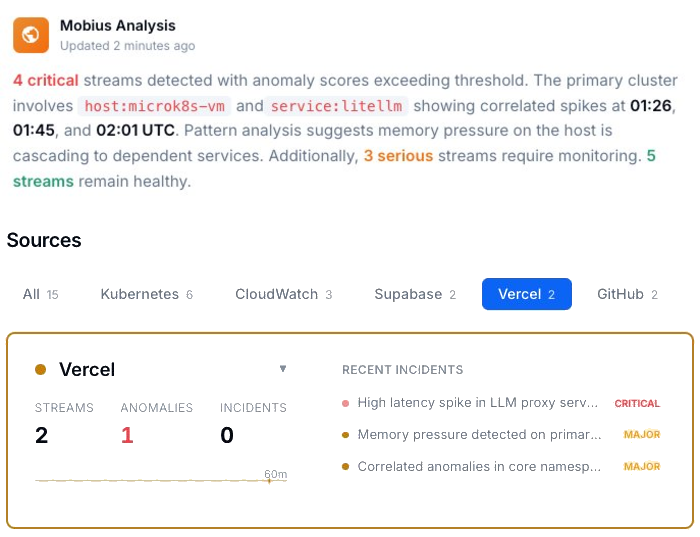
Your Oversight Ends Where the Agent’s Code Starts to Run
Agents Ship More Code, More Often
Runtime Is Where the Agent Goes Blind
2 min
Time to First Insight
The Agentic Engineering Loop
Four failure modes
Four Ways Agent-Written Code Fails After It Looks Done.
Agent-written code often passes review and evals before it meets production reality. The common failures share one root: the agent optimized for a plausible answer, not proof of runtime correctness.
01
The agent completed against a pattern, not your live API
Coding agents continue what looks plausible from training, not your runtime’s real response shape. The code compiles, tests pass on the fixture, and the mismatch only surfaces against live traffic.
# Agent inferred from similar code
const status = resp.data.status.toLowerCase()
const url = resp.data.html_url
# Live response had a different shape
resp.data.status null
resp.data.html_url undefined
TypeError · Cannot read properties of null
tests: passing on mock
02
The agent’s fix addressed the wrong failure
Ask an agent to fix a failing call and it patches the symptom it can see. It can’t confirm the patch matches the failure mode you actually hit in production.
# Agent saw a failing request
retry(fetchUser, 3)
real cause · expired auth scope
# Patch masks it for three retries
then 401 again
users signed out
03
The agent changed four files; the incident spans three
Agentic runs touch many files at once. When something breaks, the failure spreads across deploy, auth, and data — and the first domino is buried in one of them.
# One agent run
edited: api · worker · auth-mw · schema
deploy: green · checks passing
# First production traffic
500s on checkout · 3 services red
root cause · one auth header
04
The next agent reintroduced a bug you already fixed
The agent writing today’s code has no memory of last week’s incident. Without runtime context fed back as durable skill, the same class of regression returns on the next run.
# Last week: fixed an N+1 query
# This week: new agent run
reintroduced · unbounded query
same root cause · second time
The productivity gain is real. So is the verification gap — and it widens as you hand more of the work to agents. Surfacing runtime context back to the agent is what closes it.
The solution
How Agentic Engineering Teams Keep Oversight After Merge.
The goal isn’t to slow your agents down. It’s to extend the discipline you already run — specs, review, evals — into the runtime where the agent’s code finally meets reality.
See the regression before it becomes an incident
Whether the agent shipped a bad query or a broken auth path, surface it the moment runtime traffic hits it — not when a user files a ticket.
Separate platform errors from agent-introduced bugs
Tell a Vercel edge limit or an expired AWS scope apart from a regression the agent actually wrote, so you fix the right thing.
Turn telemetry into an answer, not another prompt
Get root cause cited to the exact log line — what broke, in which deploy, across which services — instead of pasting logs back into the agent and hoping.
Trace the blast radius across the agent’s whole run
One run touches many files and services. Follow the failure across app, deploy, auth, and data to the first domino.
Remember what broke so the next agent doesn’t repeat it
Capture each root cause as durable context the coding agent can read — the memory that keeps a fixed regression fixed.
What you get
What Agentic Engineering Looks Like After Merge.
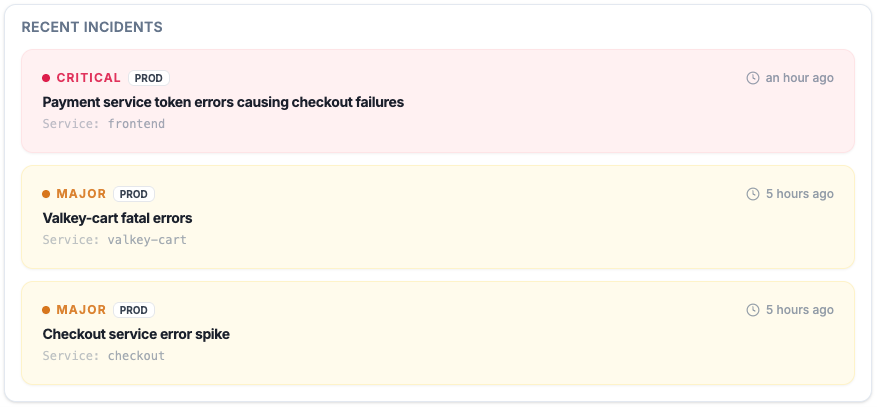
Active Incidents
See which agent-shipped failures are real, noisy, or spreading
Instead of triaging every alert by hand, get the few that actually matter.
Code Quality
Catch the regressions agents introduce
Without slowing the team down — evidence from production, not a subjective review.
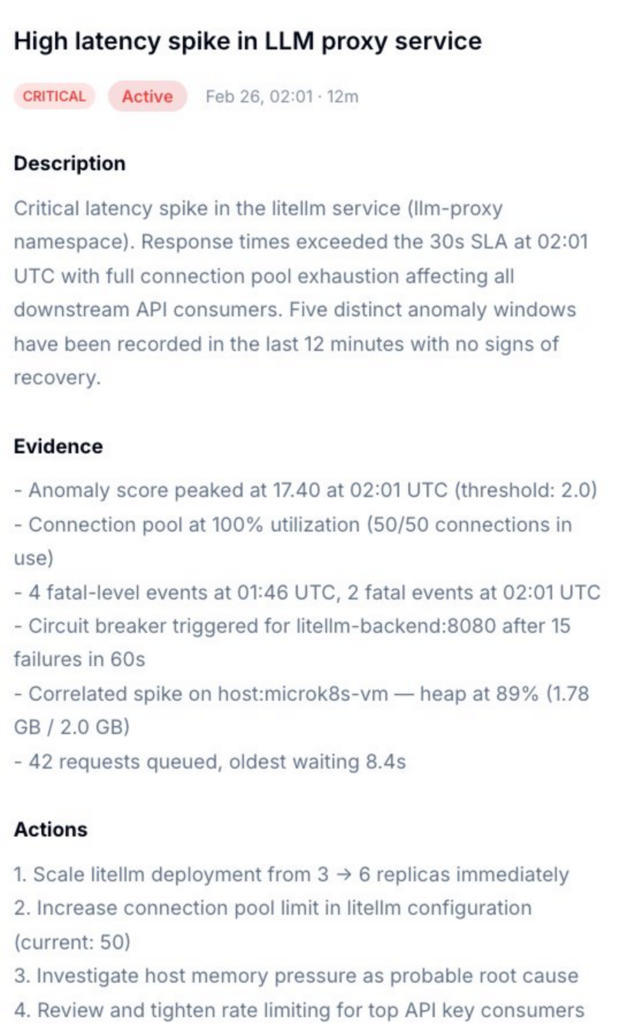
Incident Detail
Root cause, evidence, and the exact log line in one place
A diagnosis that says whether the agent’s code, a deploy, or a dependency is at fault.
Mobius
Ask what changed, what broke, and which deploy did it
Natural language over real telemetry — answers cited to the line.
Get Started
Start with Gonzo — free, open source, 2 minutes
2K+ GitHub stars. Inspect what your stack is doing in real time, then add Dstl8 for continuous root cause.
How agentic teams cover runtime
Closing the Loop After Merge: Your Options.
Capability
Catch regressions the coding agent introduced
Separate platform errors from agent-authored bugs
Hand the agent verified root cause, not raw logs
Trace blast radius across the agent’s whole run
Remember fixes so the next agent doesn’t undo them
Time to first insight
Manual
Hours
AI-Tool-Only Workflow
Prompt by prompt
ControlTheory
2 minutes
Why it’s different
Agentic Engineering Doesn’t End at Merge.
When you write the code, your oversight covers it end to end. When an agent writes it, your specs and reviews govern it only up to merge — then it ships into a runtime you’re no longer watching.
You’re accountable for code you didn’t write
You set the constraints; the agent chose the route. To own the outcome, you need to see what it actually did at runtime.
The failure modes are novel
Agents complete against patterns, not your runtime — producing mismatches, hallucinated APIs, and silent coercions nobody wrote an alert for.
The volume is 10x
Agents ship more code, more often. The one line that explains the failure is buried deeper than any human-paced workflow assumed.
Speed of detection matters more
Agent code ships in seconds. If detection takes hours, the gap between shipping and knowing is where incidents live.
Common questions
Agentic Engineering — Questions from Engineering Teams.
Get started
Install & Configure Dstl8 in Under 2 Minutes.
Try the Dstl8 CLI and TUI for continuous runtime feedback. Install it, add sources, connect the MCP server into Claude Code, and more.
brew install control-theory/dstl8/dstl8
dstl8 signup
curl -fsSL https://install.dstl8.ai/script/dstl8-cli | shnpx dstl8nix run github:control-theory/dstl8Download from https://github.com/control-theory/dstl8/releasesQuick Start
# 1. Install the CLI
brew install control-theory/dstl8/dstl8

# 2. Create a Dstl8 account (or `dstl8 login` if you already have one)
dstl8 signup

# 3. Add a source so logs flow in
dstl8 sources add vercel

# 4. Connect your AI agent, auto-detects MCP-compatible clients on your machine and configures them
dstl8 install --all
dstl8 install claude-code
Add Sources
# Add Sources

dstl8 sources add kubernetes
dstl8 sources add cloudwatch
dstl8 sources add vercel
dstl8 sources add supabase
dstl8 sources add otlp
dstl8 sources add github
Start Here
Extend oversight into runtime.
Connect your deployment chain. Surface the regressions agents introduce. Get root cause analysis with fix recommendations — right in your editor.
? Intelligence that compounds — every runtime signal makes the next one sharper.
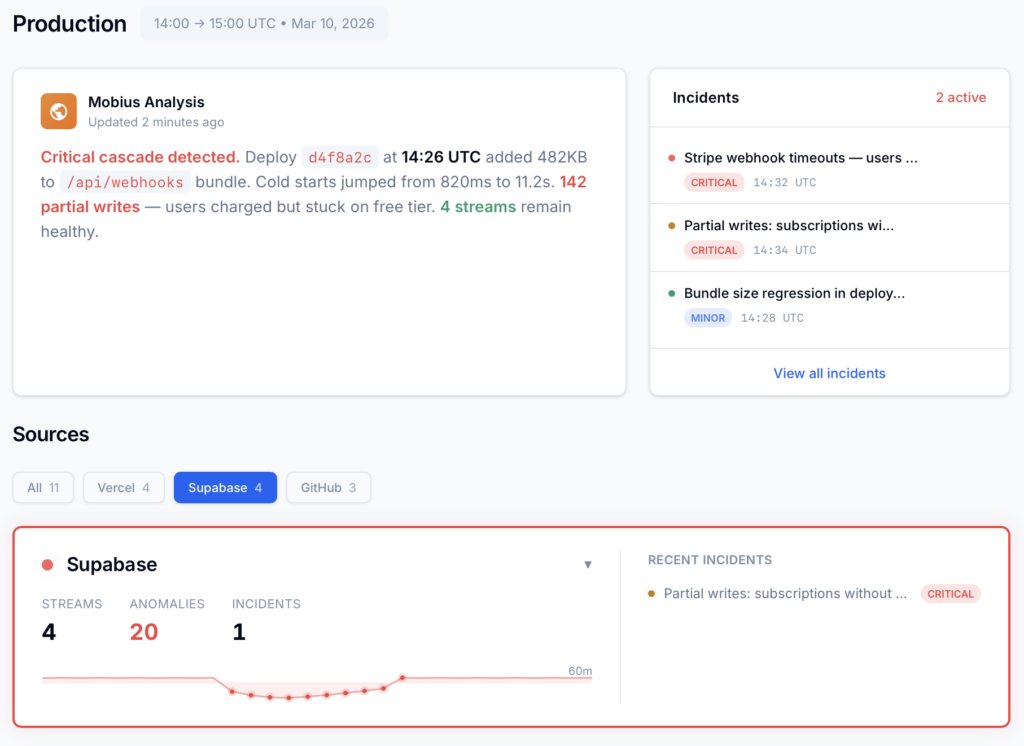
Dstl8 — Supabase runtime analysis

Open Source
Not ready for Dstl8? Start with Gonzo.
Free, open source log analysis TUI. Real-time charts, pattern detection, AI-powered insights — right in your terminal. No account, no config.
brew install gonzo
Let Your Agents Ship. Keep Oversight in Runtime.
Free account. Gonzo against your production logs in 2 minutes. Early access to Dstl8. No credit card.
Related pages
More for agentic engineering teams.
Your Agents Write the Code. Keep Owning What It Does.
Free, open source, terminal-native. Point it at your stack and get root cause in 2 minutes. No account, no config.