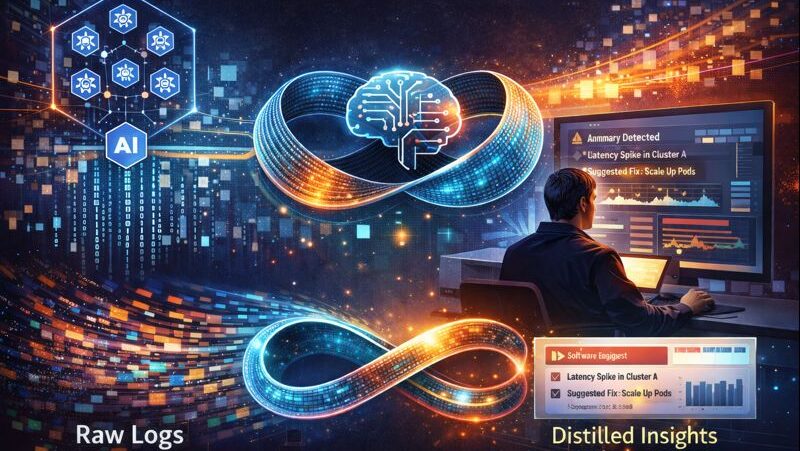

Your engineering team is moving faster than ever. Claude, GitHub Copilot, and other AI coding assistants are helping you ship features in hours instead of days. Your microservices architecture enables independent deployments. Your CI/CD pipeline pushes code to production multiple times a day.
But there’s a problem: your observability stack was built for a different era.
The Legacy Observability Trap
Traditional observability tools were designed around a fundamental assumption: you know what problems to look for. You instrument your code, define your dashboards, configure your alerts, and build your runbooks – all based on issues you’ve already encountered.
This worked when:
- Release cycles were measured in weeks or months
- A small ops team could maintain institutional knowledge
- System complexity was manageable enough to predict failure modes
- You had time to conduct post-mortems and update monitoring
But that world is gone.
When you’re shipping AI-generated code multiple times per day, you’re introducing patterns and edge cases faster than any human can define monitors for them. Your carefully crafted dashboards become stale within days. Your alerts only catch the problems you anticipated last quarter.
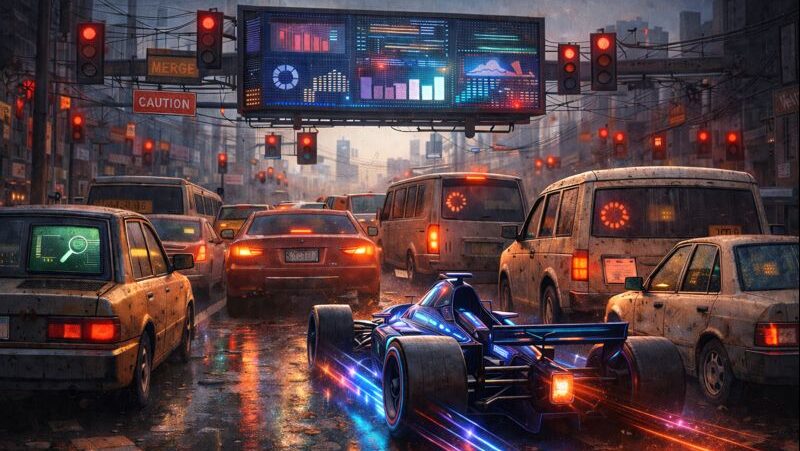
And here’s the painful irony: the faster you ship with AI coding tools, the more you need observability – but legacy tools actually slow you down. Sort of like an F1 car, stuck in legacy observability traffic gridlock.
The Expertise Bottleneck
Walk into most engineering organizations and you’ll find a familiar pattern: a small group of platform or ops engineers who are the “observability experts.” They know the complex query languages (PromQL, LogQL, KQL). They maintain the dashboards. They interpret the metrics during incidents.
Everyone else? They’re locked out.
Your frontend developers don’t know how to write the right queries. Your support team can’t tell if a customer’s issue is systemic. Your product managers can’t get visibility into feature performance without filing tickets.
This centralization of observability expertise creates dangerous bottlenecks:
- Slower incident response – developers wait for ops to investigate instead of debugging themselves
- Reduced autonomy – teams can’t answer their own questions about their services
- Context switching – insights live in separate tools from where people actually work (IDE, terminal, Slack)
You’ve democratized the ability to ship code with AI tools. Why is understanding that code still locked behind specialized expertise?
What AI-Speed Development Actually Needs
The current reality demands a different approach to observability – one that matches the velocity and distributed nature of modern development:
1. Discover the Unknown, Automatically
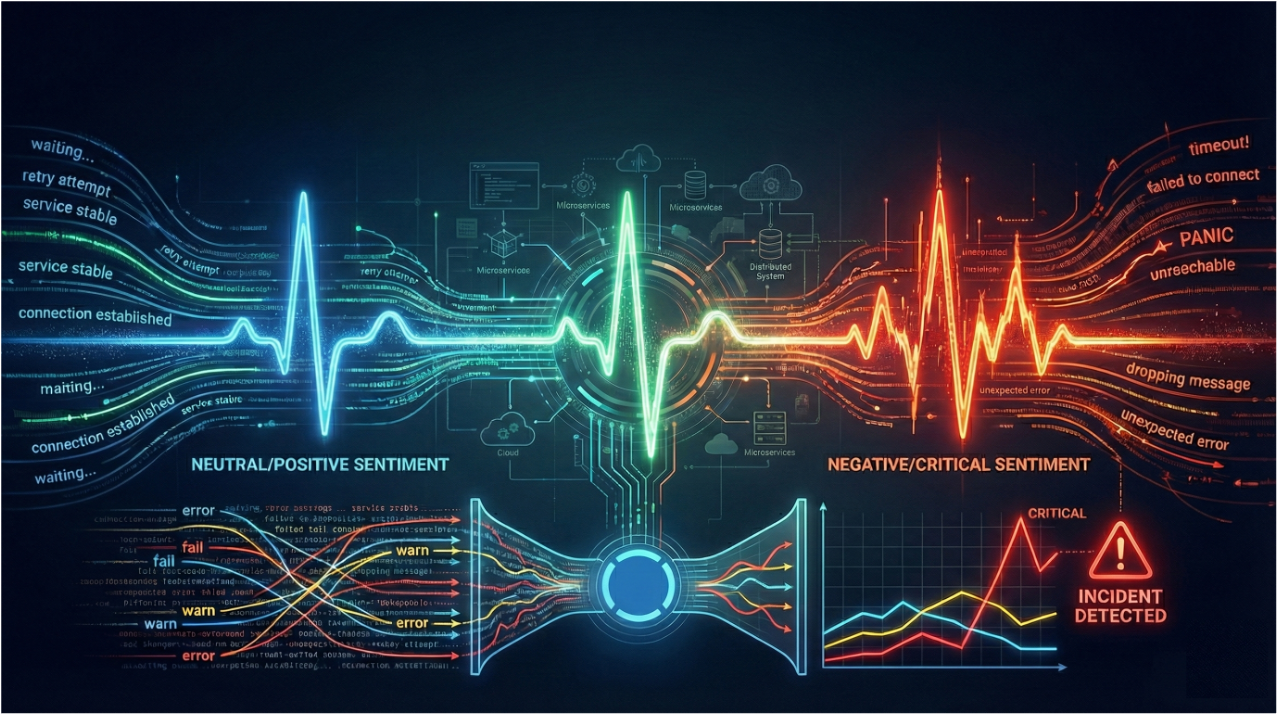
Legacy observability surfaces problems you already defined. But AI-generated code introduces behaviors you’ve never seen before. You need systems that can identify emerging patterns, anomalies, and issues without requiring you to configure them in advance.
The question isn’t “are we seeing the errors we expected?” It’s “what’s actually happening that we didn’t anticipate?”
2. Insights Where You Work
Developers live in their IDE and terminal. Support teams work in ticketing systems and Slack. Why should they context-switch to specialized observability platforms to answer basic questions?
AI Observability insights should meet people where they are:
- In your AI-powered IDE when you’re writing code
- In your terminal when you’re investigating
- In Slack when your customer success team asks “is this customer impacted?”
3. Answers, Not More Dashboards
During an incident, you don’t need another dashboard. You need answers:
- What changed?
- What’s the root cause?
- Which customers are affected?
- What should I do next?
These answers should be accessible to anyone on your team – not just the ops engineers who know the magic query incantations.
4. One Fabric, Many Audiences
Your logs already contain the truth about your systems. The same underlying data that helps engineers debug should help support teams understand customer impact and product teams measure feature adoption.
You don’t need separate observability stacks for different teams. You need one intelligent layer (AI Observability) that provides the right insights to the right people.
Working with What You Have
Here’s what’s interesting: you probably already have the raw data you need. Your applications generate logs. Those logs capture what’s actually happening in your systems.
The problem isn’t data collection – it’s data understanding.
Legacy tools require you to:
- Predict what metrics matter
- Manually instrument code
- Configure dashboards and alerts
- Build queries to investigate
- Update everything as your system evolves
What if instead, you could work with the logs you already have, and automatically surface what actually matters – emerging issues, behavioral changes, root causes – without the manual configuration overhead?
The Path Forward
The gap between your development velocity and your understanding velocity is widening. AI coding tools let you ship faster, but legacy observability can’t keep up. This creates real risk: you’re moving fast, but potentially blind.
The solution isn’t to slow down development. It’s to evolve how you understand your systems.
Modern observability for AI-speed development should:
- Surface the unexpected, not just monitor the known
- Democratize insights, not concentrate expertise
- Meet people where they work, not force context switches
- Provide answers, not just more data to sift through
Your team has already embraced AI to move faster on the build side. It’s time for observability to catch up – to help you understand faster, debug faster, and ultimately ship with both speed and confidence.
The future of software development is AI-augmented. The future of observability should be too. Instead of tools that slow you down with configuration and specialized expertise, imagine observability that automatically understands your systems and delivers insights to everyone who needs them – at the speed your team actually moves.
Table of Contents
Surface Unknown Unknowns Automatically
Catch emergent patterns from AI-generated code in staging—before they become production incidents.
Learn About Dstl8 Back
Back


press@controltheory.com